
What is CBT?
Cognitive Behavioural Therapy, or CBT, is an evidence-based therapy that can help you understand and change unhelpful patterns of thinking and behaviour that may be keeping you stuck. It is recommended by the National Institute for Health and Care Excellence (NICE) for a range of difficulties, including anxiety and depression.
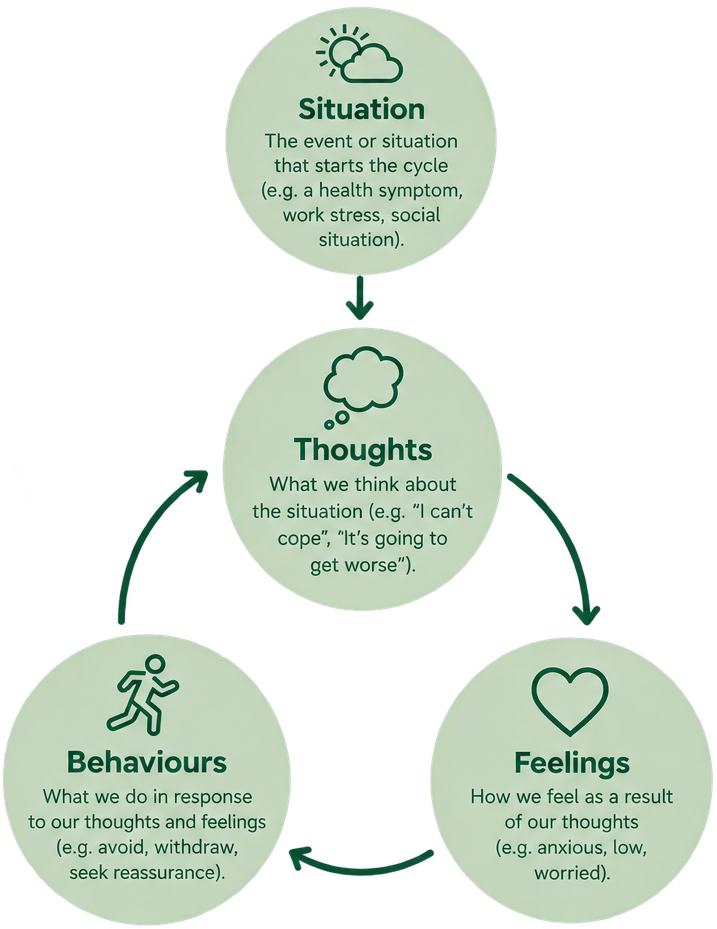
CBT is based on the idea that the way we think can affect how we feel and what we do. Together, we'll explore your experiences and develop a better understanding of the patterns that may be maintaining your difficulties.
CBT is a collaborative therapy, meaning we work together. We'll then develop and test out new ways of responding to difficult situations, thoughts and feelings. Sometimes this involves trying things out between sessions, helping you put what you've learned into practice and move closer towards your goals.
The aim is not simply to help you feel better in the moment, but to develop skills and strategies that you can continue using long after therapy has ended.
What can CBT help with?
CBT can be helpful for a wide range of difficulties, including:
Depression and low mood
Generalised Anxiety Disorder (GAD)
Panic attacks and panic disorder
Stress
Obsessive Compulsive Disorder (OCD)
Social anxiety
Post-traumatic stress
Phobias
Anger
Insomnia
Low self-esteem

How can CBT help with long-term health conditions?
Living with a long-term health condition can bring challenges that go beyond physical symptoms. CBT won't cure your illness, but it can help you manage the emotional and psychological impact of living with it.

CBT can help you to:
Break cycles of fear and avoidance
Reduce anxiety and worry about your health and symptoms.
Build confidence in doing activities you may have stopped or begun avoiding
Find a more helpful balance between activity, rest and managing your health
Cope with flare-ups, setbacks and uncertainty
Manage the impact of stress on your physical symptoms
Challenge unhelpful thoughts about yourself, your health or the future
Adjust to changes in your identity, relationships, work or independence
Reconnect with the people, activities and things that matter to you
Feel more confident in living a valued and meaningful life alongside your condition

What does a CBT session look like?
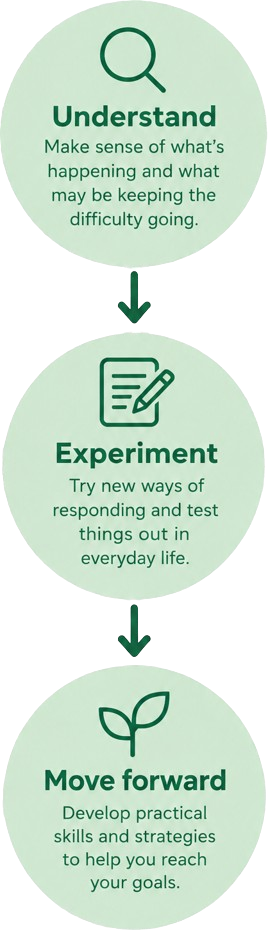
The first sessions are an opportunity to get to know you and understand what has brought you to therapy. We'll explore your current difficulties, relevant experiences and history, as well as what you hope to get from therapy. Together, we'll agree on some goals to work towards.
As therapy progresses, we'll begin to understand what may be keeping your difficulties going. This might involve exploring the relationship between your thoughts and beliefs, emotions, physical sensations and behaviours.
Together, we'll develop a plan for moving forward and begin learning practical skills and strategies to help break unhelpful cycles. There may sometimes be things to try between sessions, giving you the opportunity to put what you're learning into practice in everyday life.
CBT is an active and collaborative process, and therapy will be adapted to your individual needs and goals.
CBT isn't the right approach for everyone, and it's important that you find a therapy that feels right for you. If, after an assessment, you decide that CBT isn't what you're looking for, I can help point you towards other types of therapy or services that may be a better fit.